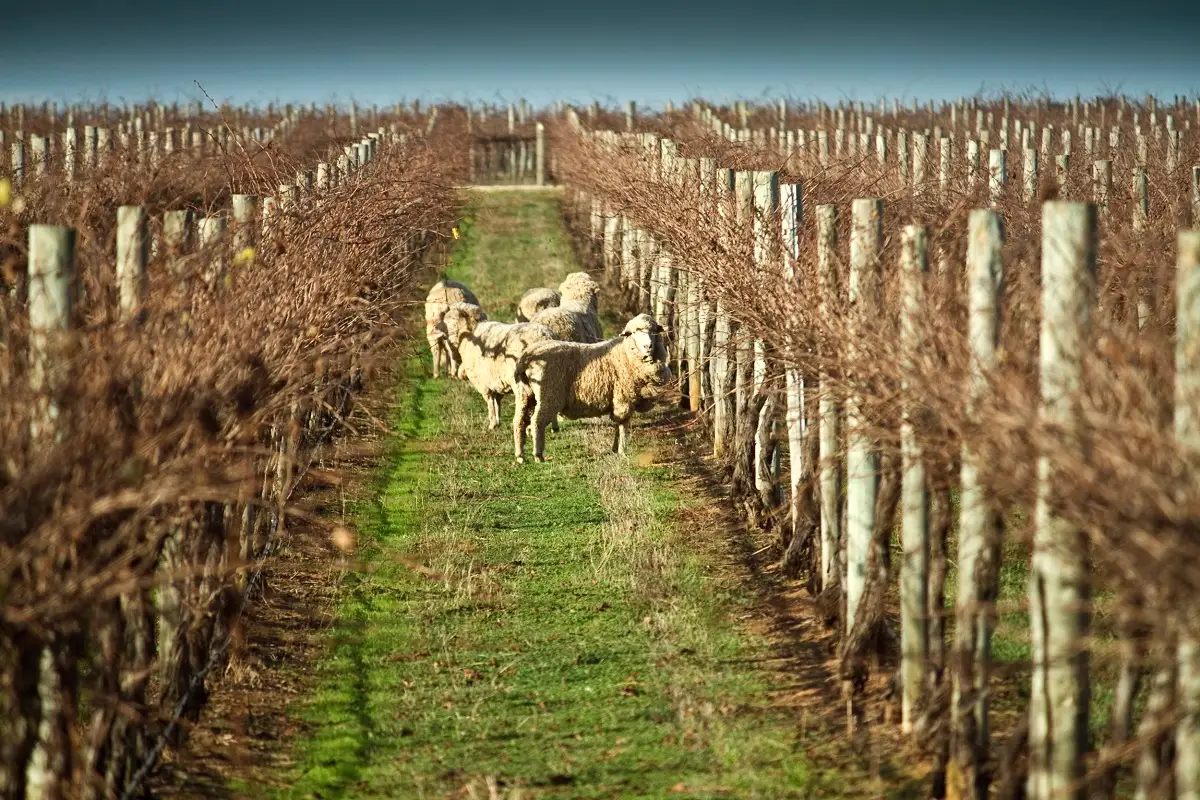
From an ancient cave in Armenia to the remarkable vineyards of the Barossa Valley, the history of wine is a story of survival, discovery and the people who kept it alive.
22 July 2026
Imagine standing beside a grapevine planted more than 180 years ago. Its trunk is thick and twisted, its roots have spent generations reaching deep into the earth, and it is still producing grapes today.
Now imagine that, across much of the wine-producing world, vines of a similar age disappeared more than a century ago.
That’s what makes South Australia’s Barossa Valley so extraordinary.
The story begins thousands of years earlier, with one of humanity’s oldest traditions: turning grapes into wine.
From the world’s oldest known winemaking facility to the ancient vines still growing in the Barossa, wine has a remarkable history. And some of its most fascinating chapters can still be experienced today.
Where Is the Oldest Winery in the World?
The world’s oldest known archaeological winemaking facility was discovered in the Areni-1 cave complex in Armenia.
Dating to approximately 4100 BC, the site is more than 6,000 years old.
Archaeologists uncovered evidence of a remarkably sophisticated winemaking operation, including a grape-pressing basin, fermentation vessels and grape remains.
The discovery revealed that people were producing wine in an organised way thousands of years before the development of many of the world’s famous wine regions.
Interestingly, the facility was found near ancient burial sites, suggesting wine may have played a role in ceremonial traditions.
Even then, wine was connected to culture, community and significant moments in people’s lives.
Is the world’s oldest winery still operating?
The Areni-1 site is an archaeological discovery, rather than a winery that continues to produce wine today.
Among the oldest surviving wine estates is Staffelter Hof in Germany’s Mosel region, whose documented history dates to 862 AD.
These are two different chapters in wine history: one revealing the ancient origins of production, the other demonstrating how winemaking traditions have continued across centuries.
And while South Australia’s wine industry is much younger, it holds something exceptionally rare.
Some of the world’s oldest surviving productive grapevines.
The Barossa Valley: The Wine the World Lost
In the nineteenth century, a tiny insect changed the course of wine history.
Phylloxera, a pest that attacks grapevine roots, spread through vineyards across Europe, devastating vast areas of established vines.
Vineyards that had produced wine for generations were destroyed. Many were eventually replanted using resistant rootstocks.
But in South Australia’s Barossa Valley, something remarkable happened.
The region’s geographic isolation and strict quarantine protections helped keep phylloxera out.
As vineyards elsewhere were lost and replanted, some of the Barossa’s original vines continued growing.
Decade after decade, they survived.
Today, the Barossa is home to some of the oldest continuously producing grapevines in the world.
These aren’t museum pieces or historic displays.
They’re living vineyards, still cultivated, harvested and used to make extraordinary wines.
It’s a remarkable connection to a chapter of wine history that much of the world can no longer experience.
The Shiraz Vines Planted in 1843
One of the most compelling examples can be found at Langmeil Winery in the Barossa Valley.
In 1843, a settler named Christian Auricht planted Shiraz vines on his property near what is now Tanunda.
Auricht was among the European settlers who had travelled to South Australia seeking religious freedom and the opportunity to build a new life.
More than 180 years later, vines from that original planting are still producing grapes.
Known as The Freedom 1843, the vineyard is believed to be the oldest surviving Shiraz vineyard in the world.
Consider what those vines have witnessed.
Generations of winemakers. The growth of the Australian wine industry. Changing farming practices, economic challenges and the evolution of wine styles.
Through it all, those vines have remained rooted in the same Barossa soil.
Today, their fruit is used to produce Langmeil’s flagship Freedom 1843 Shiraz.
It’s an extraordinary example of how a wine can carry the history of a place within it.
Why Are Old Vines So Special?
Age alone doesn’t guarantee exceptional wine.
But old vines can offer characteristics that make them particularly interesting to growers, winemakers and wine lovers.
As grapevines mature, their root systems become well established and their growth patterns change.
Many very old vineyards produce relatively small quantities of fruit, and experienced winemakers value the distinctive qualities these sites can express.
The resulting wines can reflect the character of the vineyard, its soils, climate and the decisions made by generations of people who have cared for it.
In the Barossa, old-vine Shiraz, Grenache and Mataro are particularly significant.
The region has even developed its own classification system to recognise and protect these historic plantings.
The Barossa Old Vine Charter
Introduced in 2009, the Barossa Old Vine Charter recognises vineyards according to the age of their vines.
Its categories include:
- Old Vine: At least 35 years old.
- Survivor Vine: At least 70 years old.
- Centenarian Vine: At least 100 years old.
- Ancestor Vine: At least 125 years old.
These classifications acknowledge the importance of preserving vineyards that represent generations of South Australian wine history.
For visitors, they also offer a fascinating way to understand why certain wines and vineyards hold such significance.
The People Who Preserved the Barossa’s Wine Heritage
The Barossa’s story is as much about people as it is about vines.
European settlers brought their knowledge of farming and winemaking to the region during the nineteenth century, establishing vineyards and communities that would shape its future.
Many vineyards remained in family hands across generations.
Knowledge was passed down, traditions evolved and the connection between the people and the land deepened.
But the survival of the Barossa’s old vines wasn’t inevitable.
As Australia’s wine industry modernised, some older vineyards were removed in favour of newer plantings.
Others survived because growers and winemakers recognised their value and chose to preserve them.
That decision helped protect a remarkable part of Australia’s wine heritage.
Today, the region’s historic vineyards sit alongside innovative wineries, contemporary cellar doors and a new generation of winemakers.
The result is a wine region where history continues to influence what happens next.
Beyond Barossa: South Australia’s Living Wine History
The Barossa Valley may be particularly famous for its old vines, but its story forms part of a much broader South Australian wine heritage.
Each region has developed its own character, shaped by its landscape, climate and the people who grow and make wine there.
Eden Valley: A Different Altitude, A Different Expression
Located in the Barossa Ranges, Eden Valley is celebrated for its elevation, cooler growing conditions and elegant wines.
Riesling is one of the region’s most recognised varieties, alongside distinctive Shiraz.
The region is also home to historic vineyards, including Henschke’s renowned Hill of Grace.
Here, the relationship between altitude, climate and winemaking provides another fascinating perspective on South Australian wine.
McLaren Vale: Ancient Land, Contemporary Wines
McLaren Vale’s wine story is closely connected to its extraordinary geology.
The region contains geological formations dating back hundreds of millions of years, creating a diverse landscape for growing grapes.
Its proximity to the coast also influences its climate.
Today, McLaren Vale is known for Shiraz, Grenache and an increasingly diverse collection of Mediterranean varieties.
Clare Valley: Generations of Winemaking Tradition
Clare Valley has a long winemaking history and is particularly celebrated for Riesling.
Historic towns, family-owned wineries and distinctive vineyard sites give the region a strong sense of place.
Its wines offer another expression of South Australia’s remarkable regional diversity.
Together, these regions demonstrate just how much there is to explore beyond a familiar wine label.
How to Experience the Barossa’s Wine History First-Hand
Reading about a vineyard planted in 1843 is fascinating.
Standing among old vines, hearing the stories behind them and tasting wines that express their character offers an entirely different perspective.
This is where a thoughtfully curated wine tour can add real depth to a visit.
With a knowledgeable local guide, you can begin to understand why certain vineyards matter, how winemaking traditions have evolved and what makes one part of the Barossa different from another.
The conversations are often just as memorable as the wines.
A cellar door host explaining the history of a family vineyard. A winemaker sharing the decisions behind a particular vintage. A guide connecting the landscape you’re travelling through with the wine in your glass.
These details bring South Australia’s wine heritage to life.
At Experience SA, we believe there’s always more to the wine than the wine.
Our private Barossa wine tours are designed around that philosophy, bringing together local knowledge, carefully selected wineries and the stories that make the region remarkable.
For travellers who want to explore the Barossa in greater depth, our Premium Private Barossa Wine Tour offers a more personal way to experience one of Australia’s most celebrated wine regions.
Winery visits and individual vineyard access depend on the selected itinerary and availability.
A Wine Story That’s Still Being Written
The world’s oldest known winemaking facility takes us back more than 6,000 years, to a time when people were already cultivating grapes and creating wine.
But the story doesn’t end in an ancient cave.
It continues in places like the Barossa Valley, where vines planted in the nineteenth century still produce fruit today.
These vineyards represent an extraordinary connection between past and present.
They remind us that great wine is shaped by more than a grape variety or a winemaking technique. It carries the influence of the land, the climate and generations of people who have cared for it.
And in South Australia, some of those stories are still growing.
Experience the Wine the World Lost
Explore the remarkable old vines, historic wineries and winemaking stories of the Barossa Valley with Experience SA.
South Australian Wine, Curated For You.
Explore Our Barossa Valley Wine Tours
The historical details in this version are supported by archaeological reporting from UCLA and National Geographic, the Barossa Old Vine Charter and Langmeil Winery’s own vineyard history.
UCLA International Institute +4
FAQs
Where is the oldest winery in the world?
The oldest known archaeological winemaking facility was found in Armenia’s Areni-1 cave complex, dating to approximately 4100 BC.
What is the oldest surviving winery still operating?
Staffelter Hof in Germany traces its documented history to 862 AD and identifies itself as the world’s oldest existing wine estate. This differs from the oldest archaeological winery.
Where are Australia’s oldest surviving Shiraz vines?
Langmeil Winery’s Freedom vineyard in the Barossa Valley was planted in 1843 and is believed to contain the world’s oldest surviving Shiraz vines.
Can you visit old vineyards on a Barossa wine tour?
Some historic vineyards and wineries can be experienced through cellar door visits and guided touring. Specific access depends on the winery, availability and itinerary.